Easter Cake Recipe
Introduction
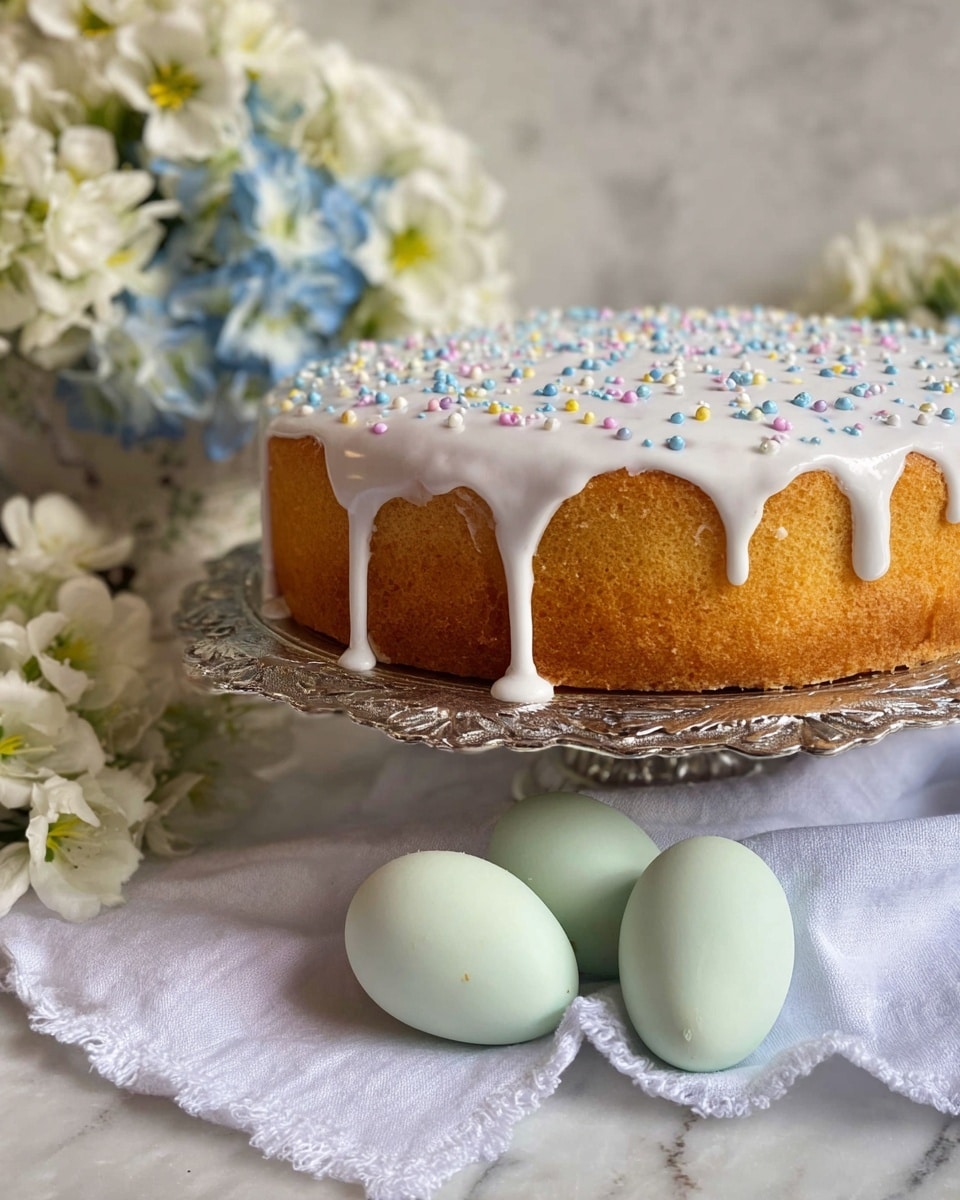
This traditional Easter Cake is a light, aromatic bread with subtle hints of lemon and anisette liqueur. Perfect for celebrating the season, it’s finished with a tangy lemon glaze and colorful sprinkles for a festive touch.
Ingredients
- 1 cup milk (warm)
- 6 eggs (beaten)
- 6 oz light olive oil
- 3 Tbsp anisette (or Sambuca, or other liqueur)
- 1 large lemon rind (grated)
- 1 ¼ cups sugar
- 6 cups all-purpose flour (up to 7 cups or 840 g if using metric)
- ⅛ tsp salt
- 2 ¼ tsp active dry yeast
- 4 cups confectioner’s sugar (powdered sugar) for icing
- 4 ½ Tbsp lemon juice (and/or water) for icing
- 1 Tbsp edible sprinkles (for decoration)
Instructions
- Step 1: For the bread machine method, place all liquid ingredients (milk, eggs, olive oil, and liqueur) into the bread machine container, then add the grated lemon rind.
- Step 2: Add the dry ingredients except yeast—sugar, flour (starting with minimum), and salt. Make a well in the flour and add yeast. Set the machine to dough cycle and start. Add more flour if dough feels too sticky once it comes together.
- Step 3: For the stand mixer method, dissolve yeast in warm milk and let activate. Beat eggs and sugar for 3–4 minutes, then switch to dough hook.
- Step 4: Add the milk-yeast mixture, oil, liqueur, and lemon rind, mixing on low to combine. Gradually add flour until soft, slightly sticky dough forms. Knead at least 10 minutes, then cover dough to rise.
- Step 5: Butter and flour three 9″ springform pans, adding parchment paper to the bottoms. Once dough doubles in size, turn it onto a floured surface and gently knead. Divide into three equal portions.
- Step 6: For regular cakes, shape each portion into a round ball and place in prepared pans. For bundt-style cakes, make a hole in each ball and stretch it to fit into pans or a bundt tin.
- Step 7: Cover and let rise 3–5 hours until well risen. Preheat oven to 350°F (175°C).
- Step 8: Bake cakes for about 25 minutes until golden brown and light. Cool in pans for 45 minutes, then remove pans and any parchment carefully.
- Step 9: To make icing, stir lemon juice and water into confectioner’s sugar until smooth with thick honey consistency. Keep covered until use.
- Step 10: Spread icing generously over cooled cakes one at a time. Quickly add sprinkles before icing sets. Let icing set completely before serving or storing.
Tips & Variations
- Skip icing and sprinkles for a less sweet, simpler cake. Increase sugar slightly if omitting the glaze.
- Use 9″ springform pans for standard cakes, or a 10″ springform if you don’t have a bundt pan for bundt-shaped cakes.
- For bundt cakes without a pan, use a buttered glass or jar filled with rice as a mold.
Storage
Store the Easter cake covered in an airtight container at room temperature for up to 3 days. For longer keeping, refrigerate and bring to room temperature before serving. The icing tastes best fresh but will hold up for a day or two.
How to Serve
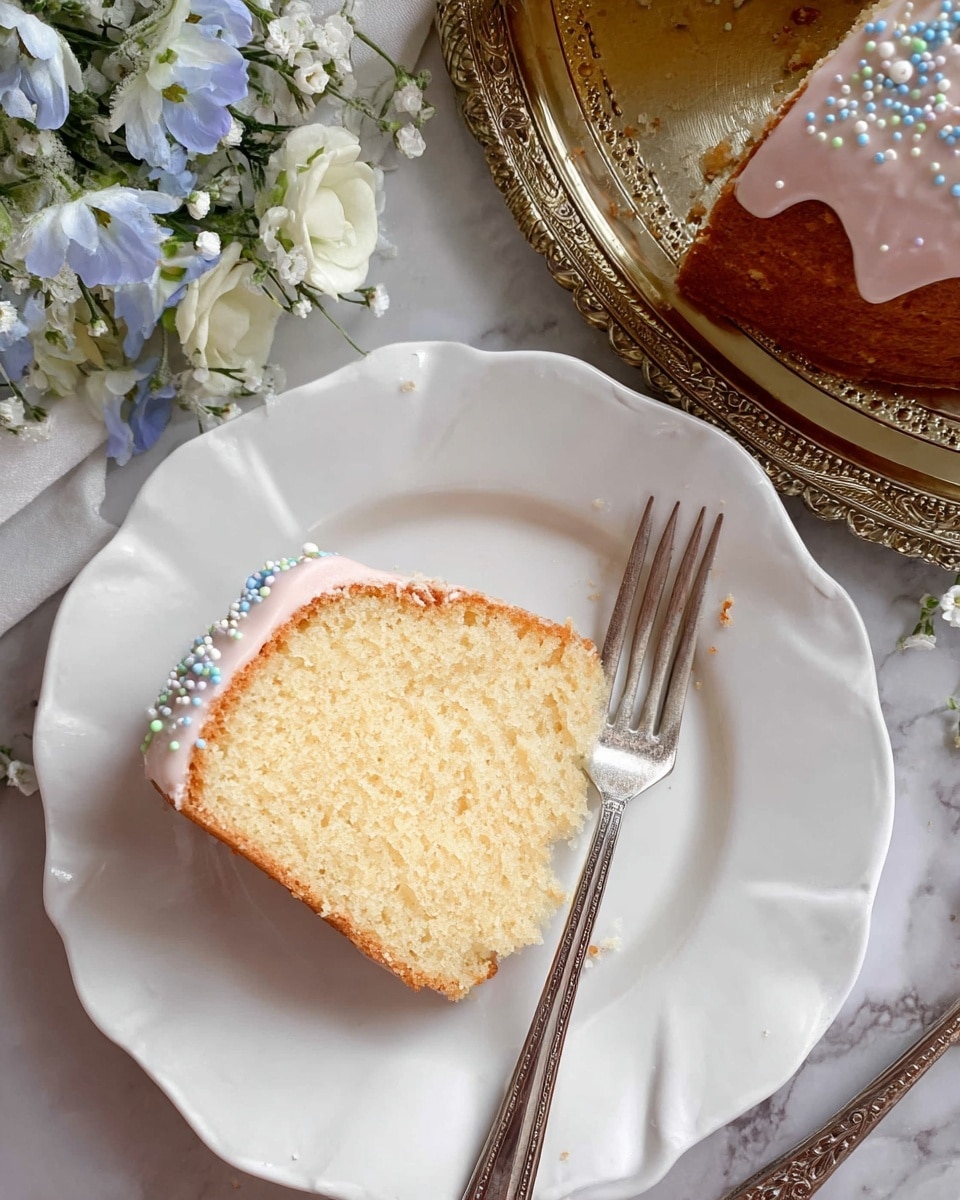
Serve this delicious recipe with your favorite sides.
FAQs
Can I make this cake without a bread machine or stand mixer?
Yes, you can knead the dough by hand. Dissolve the yeast in warm milk as directed, beat eggs and sugar separately, then gradually incorporate all ingredients. Knead on a floured surface for about 10–15 minutes until smooth and elastic.
What can I substitute for anisette or Sambuca?
You can use any mild anise-flavored liqueur, or if you prefer no alcohol, a teaspoon of anise extract can be used instead. Adjust the amount to taste as extract is more concentrated.
PrintEaster Cake Recipe

This traditional Easter Cake is a light, airy yeast sweet bread flavored with lemon and anisette liqueur, topped with a tangy lemon icing and festive sprinkles. Perfect for spring celebrations, this recipe can be prepared using a bread machine or a stand mixer, then shaped into round cake forms or bundt style. The cake is baked until golden and extremely light, providing a delightful balance of subtle sweetness and fresh citrus notes, finished with a smooth, shiny lemon glaze.
- Prep Time: 20 minutes
- Cook Time: 25 minutes
- Total Time: 4 hours 45 minutes (including rising time)
- Yield: 3 cakes (9-inch each) 1x
- Category: Dessert
- Method: Baking
- Cuisine: Italian
Ingredients
Dough Ingredients
- 1 cup warm milk
- 6 eggs, beaten
- 6 oz light olive oil
- 3 Tbsp anisette (or Sambuca or other liqueur)
- 1 large lemon rind, grated
- 1 ¼ cups sugar
- 6 cups all-purpose flour (up to 7 cups or 840 g)
- ⅛ tsp salt
- 2 ¼ tsp active dry yeast
Icing & Decoration
- 4 cups confectioner’s sugar (powdered sugar)
- 4 ½ Tbsp lemon juice (and/or water)
- 1 Tbsp edible sprinkles (as needed for decorating)
Ingredients for One Cake
- ⅓ cup (80 ml) warm milk
- 2 eggs, beaten
- 2 oz (60 ml) light olive oil
- 1 Tbsp anisette or Sambuca (or other liqueur)
- 6 ½ Tbsp sugar
- 2 to 2 ⅓ cups (240 g to 280 g) all purpose flour
- Pinch of salt
- ¾ tsp active dry yeast
- Decoration: 1 ⅓ cups (130 g) confectioner’s sugar, about 1 ½ Tbsp lemon juice and water, sprinkles
Instructions
- Prepare Dough (Bread Machine): Place all liquid ingredients—warm milk, beaten eggs, olive oil, and anisette—in the bread machine container. Add the grated lemon rind. Add sugar, flour (starting with minimum amount), and salt on top. Make a well in the flour and add the yeast. Set the machine to dough mode and start. Once dough comes together, add more flour if needed to achieve a slightly sticky dough.
- Prepare Dough (Stand Mixer): Dissolve yeast in warm milk and let activate. In the stand mixer, beat eggs and sugar for 3-4 minutes. Switch to the dough hook and add activated milk and yeast mixture, olive oil, anisette, and lemon rind; mix on low until combined. Gradually add flour until a soft, slightly sticky dough forms. Knead on medium speed for at least 10 minutes. Shape dough into a ball and cover.
- Shape and Proof Dough: Butter and flour three 9-inch springform pans, optionally lining bottoms with parchment. Allow dough to double in size. Turn dough onto a floured surface and gently knead. Divide into three equal parts. Shape each piece into a smooth round ball. For bundt cakes, make a hole in the center and stretch it to form a ring. Place shaped dough into prepared pans. Cover and allow to rise for 3 to 5 hours until well risen.
- Preheat Oven and Bake: Preheat oven to 350°F (175°C). Bake cakes for approximately 25 minutes or until golden brown and very light in weight.
- Cool Cakes: Allow cakes to cool in pans for about 45 minutes. Gently remove springform pan sides, parchment paper, or jar used for bundt shape.
- Make the Icing: Stir lemon juice and water into powdered sugar until smooth with the consistency of thick honey. Keep covered until ready to use.
- Ice and Decorate Cakes: Spread icing generously over the tops of cooled cakes, working on one cake at a time to apply sprinkles quickly before icing sets. Once decorated, allow icing to set completely before serving or storing in an airtight container.
Notes
- Omit icing and sprinkles for a less sweet cake, but consider increasing sugar in dough slightly as it is not very sweet on its own.
- Use 9-inch springform pans for full cakes, or a 10-inch springform if substituting for a bundt pan.
- This recipe is versatile and can be shaped as regular round cakes or as bundt-style cakes by forming center holes in the dough balls.
- Ensure dough is slightly sticky to achieve best texture; do not add too much flour during kneading.
- This cake benefits from the lemon and anisette flavors; however, other anise-flavored liqueurs can be substituted as preferred.
Keywords: Easter Cake, Yeast Cake, Lemon Cake, Anisette Cake, Festive Cake, Sweet Bread, Spring Baking