Rosemary & Roasted Garlic Artisan Bread Recipe
Introduction
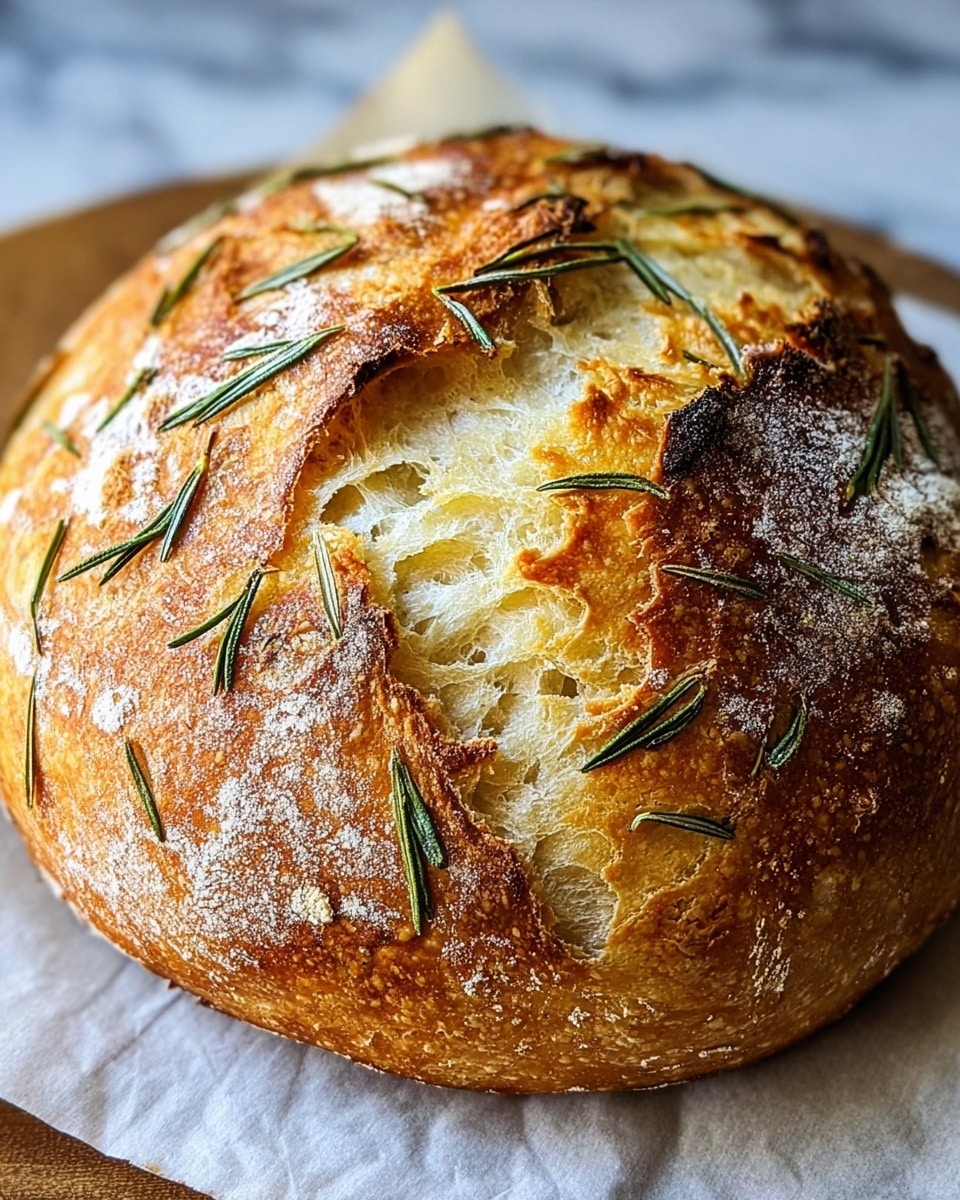
This Rosemary & Roasted Garlic Artisan Bread offers a fragrant, flavorful twist on classic homemade bread. With tender crumb and a crispy crust, it’s perfect for sandwiches or simply enjoyed with butter. The roasted garlic adds a subtle sweetness that complements the fresh rosemary beautifully.
Ingredients
- 1 head garlic
- Extra-virgin olive oil
- Coarse sea salt
- Freshly ground black pepper
- 1½ cups water (room temperature)
- 1 teaspoon active dry yeast
- 3 cups bread or all-purpose flour
- ½ teaspoon dried oregano
- 1 teaspoon kosher salt
- 2 teaspoons finely chopped rosemary (plus extra for topping)
Instructions
- Step 1: Preheat your oven to 400°F (204°C). Slice the garlic head in half, drizzle with olive oil, and season with coarse sea salt and freshly ground black pepper. Wrap it in foil and roast for about 40 minutes until soft.
- Step 2: In a bowl, combine the active dry yeast with room temperature water and let it sit until frothy, about 10-15 minutes.
- Step 3: In a separate large bowl, mix the flour, dried oregano, kosher salt, and chopped rosemary.
- Step 4: Add the frothy yeast mixture, the roasted garlic (smashed), and a drizzle of olive oil to the dry ingredients. Use a spatula to combine until just mixed.
- Step 5: Cover the bowl and let the dough rise in a warm place until doubled in size, about 8-10 hours.
- Step 6: Turn the dough onto a floured surface and shape it into a ball. Place it seam side up in a floured bowl, cover, and refrigerate overnight or for up to 48 hours.
- Step 7: Preheat your oven to 450°F (232°C) with a Dutch oven inside.
- Step 8: Shape the chilled dough onto a piece of parchment paper, seam side down. Score the top with a sharp knife and sprinkle with extra rosemary if desired.
- Step 9: Carefully transfer the dough with the parchment paper into the hot Dutch oven. Bake covered for 30 minutes, then uncover and bake for an additional 15-20 minutes until golden brown.
- Step 10: Remove the bread and cool on a wire rack before slicing.
Tips & Variations
- For a stronger garlic flavor, use two heads of garlic or add finely minced fresh garlic to the dough.
- If you prefer a softer crust, brush the loaf with olive oil after baking instead of water.
- Try swapping rosemary with thyme or sage for a different herb aroma.
- Use bread flour for a chewier texture or all-purpose flour for a lighter crumb.
Storage
Store the bread wrapped loosely in a clean kitchen towel at room temperature for up to 3 days. For longer storage, slice and freeze in an airtight bag for up to 1 month. Reheat slices in a toaster or oven for best results.
How to Serve
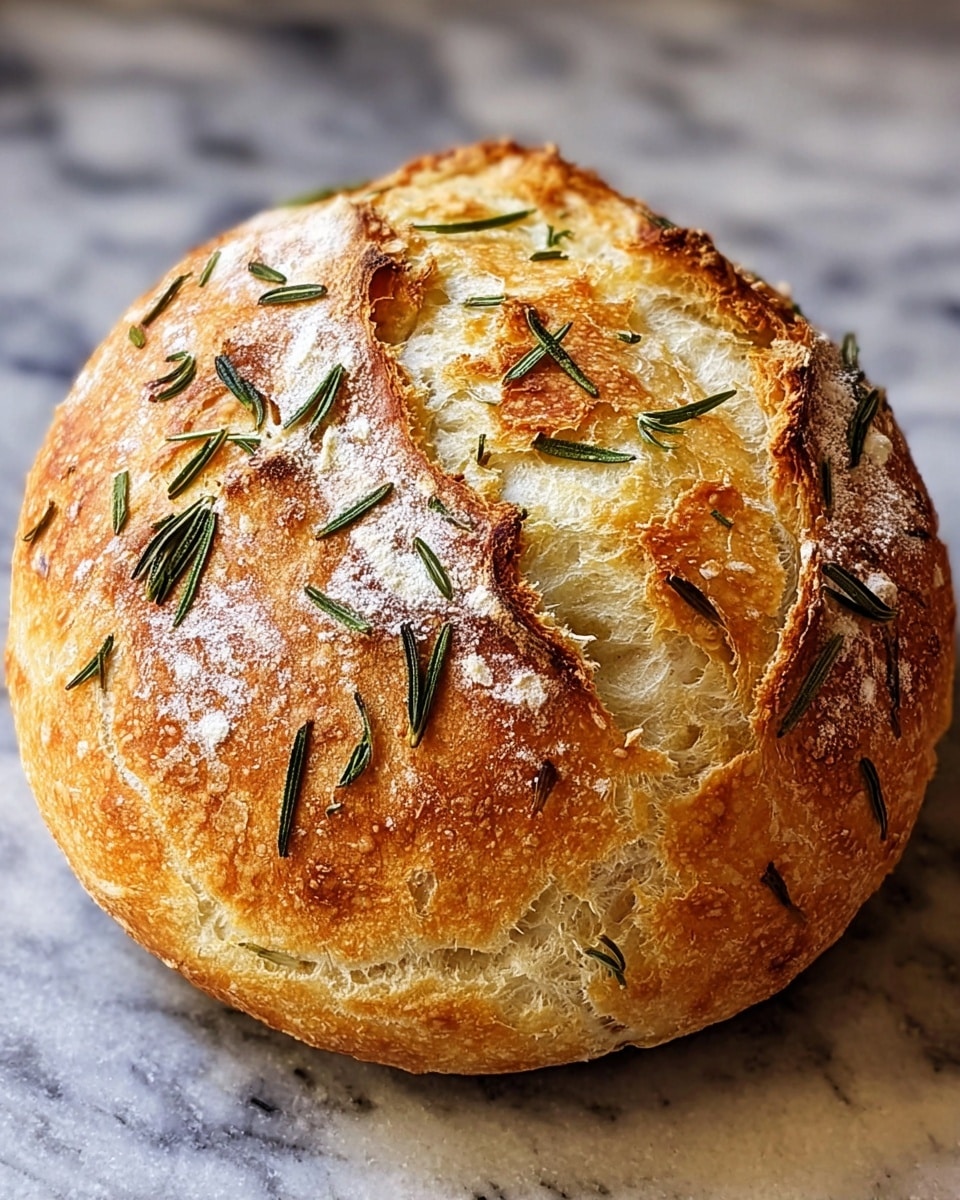
Serve this delicious recipe with your favorite sides.
FAQs
Can I make this bread without a Dutch oven?
Yes, you can bake the loaf on a baking stone or sheet. To mimic the steam environment of a Dutch oven, place a pan of hot water in the oven to create steam, which helps develop a crusty exterior.
How long does the dough need to rise?
The dough should rise until doubled in size, which generally takes 8 to 10 hours at room temperature. For best flavor and texture, a slow rise is recommended.
PrintRosemary & Roasted Garlic Artisan Bread Recipe
This Rosemary & Roasted Garlic Artisan Bread is a fragrant, flavorful homemade loaf featuring roasted garlic, fresh rosemary, and a perfect golden crust baked in a Dutch oven. With a long rise time to develop depth of flavor and a crispier texture, this bread combines simple ingredients and rustic techniques for an impressive artisan result.
- Prep Time: 20 minutes
- Cook Time: 50 minutes
- Total Time: 9 hours 10 minutes (including 8-10 hour rise and overnight refrigeration)
- Yield: 1 loaf (approximately 12 slices) 1x
- Category: Bread
- Method: Baking
- Cuisine: Artisan/European
Ingredients
Roasted Garlic
- 1 head garlic
- Extra-virgin olive oil
- Coarse sea salt
- Freshly ground black pepper
Dough
- 1½ cups water (room temperature)
- 1 teaspoon active dry yeast
- 3 cups bread or all-purpose flour
- ½ teaspoon dried oregano
- 1 teaspoon kosher salt
- 2 teaspoons finely chopped rosemary (plus extra for topping)
- Extra olive oil for mixing
Instructions
- Roast the garlic: Preheat oven to 400°F (204°C). Slice the garlic head in half horizontally, drizzle with olive oil, season with coarse sea salt and freshly ground black pepper. Wrap tightly in foil and roast for about 40 minutes until soft and fragrant.
- Activate the yeast: In a bowl, combine the active dry yeast with room temperature water. Let it sit for 10-15 minutes until frothy, indicating the yeast is active.
- Prepare the dry ingredients: In a separate large bowl, mix together the flour, dried oregano, kosher salt, and finely chopped rosemary.
- Mix the dough: Add the frothy yeast mixture, the smashed roasted garlic cloves, and a drizzle of olive oil to the dry ingredients. Use a spatula to combine until just mixed into a shaggy dough.
- First rise: Cover the bowl with a damp cloth or plastic wrap and let the dough rise in a warm place for 8-10 hours until it has doubled in size and developed flavor.
- Shape and refrigerate: Turn the dough out onto a floured surface and shape it into a tight round ball. Place it seam side up in a floured bowl, cover, and refrigerate overnight or up to 48 hours to slow ferment and improve texture.
- Preheat oven and Dutch oven: About 45 minutes before baking, preheat your oven to 450°F (232°C) and place a Dutch oven inside to heat thoroughly.
- Shape and score the dough: Remove the chilled dough from the fridge, place it seam side down onto a piece of parchment paper. Using a sharp knife or lame, score the top with slashes for expansion. Optionally, sprinkle extra chopped rosemary on top for garnish.
- Bake the bread: Carefully transfer the dough on the parchment paper into the hot Dutch oven. Cover with the lid and bake for 30 minutes.
- Finish baking uncovered: Remove the lid and bake an additional 15-20 minutes until the crust is deep golden brown and crisp.
- Cool and serve: Remove the bread from the Dutch oven and transfer to a wire rack to cool completely before slicing to allow the crumb to set perfectly.
Notes
- Ensure the water for the yeast is lukewarm, not hot, to avoid killing the yeast.
- Roasted garlic adds a soft, mellow garlic flavor that is less harsh than fresh garlic.
- The long fermentation time enhances the bread’s flavor and texture – plan ahead for this.
- Using a Dutch oven creates steam which helps develop a crusty, artisan-style crust.
- Leftover bread can be stored in an airtight container for up to 3 days or frozen for longer storage.
- For gluten-free variation, substitute a gluten-free flour blend but expect some texture changes.
Keywords: artisan bread, roasted garlic bread, rosemary bread, homemade bread, Dutch oven bread