Italian-Style Pickled Cauliflower Recipe
Introduction
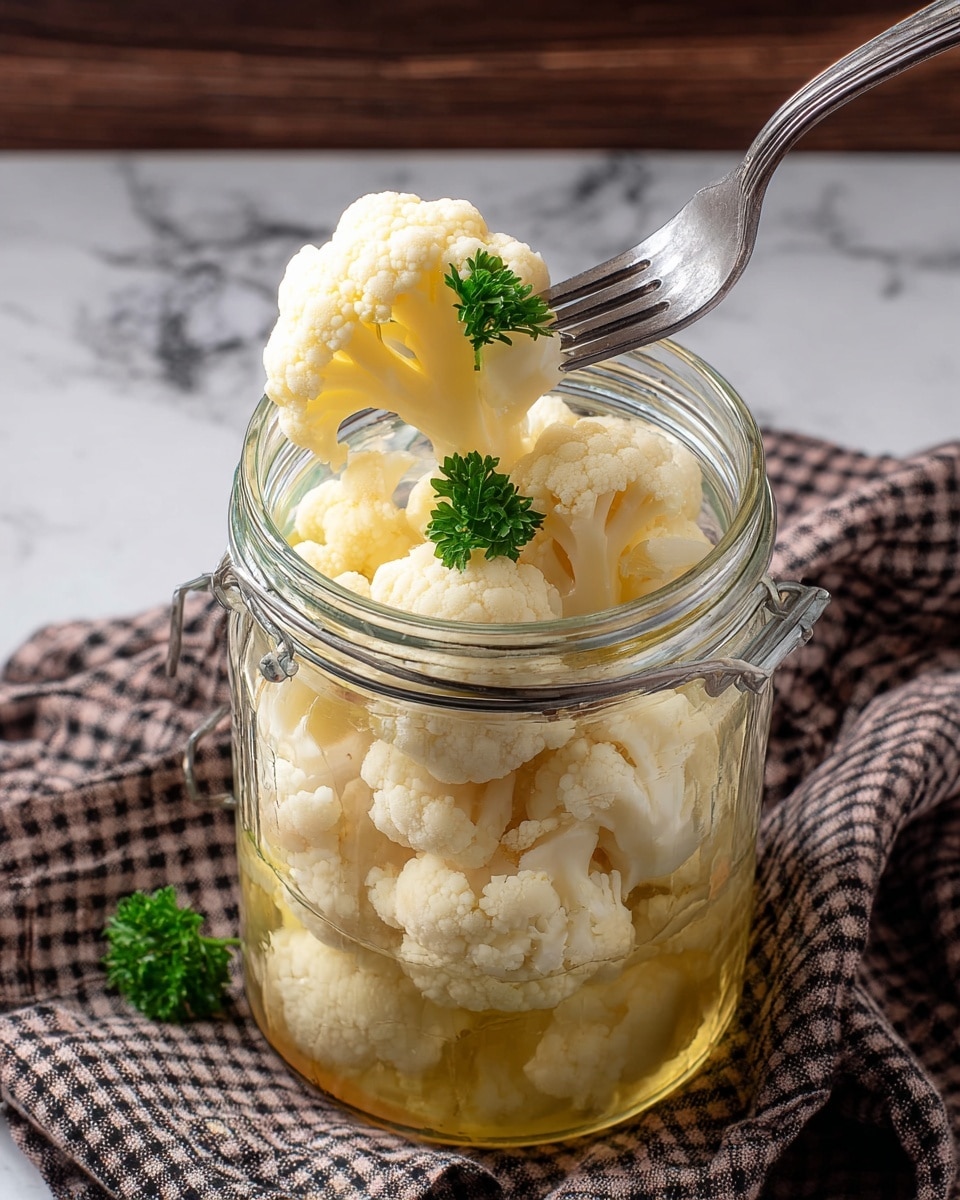
This Italian-style pickled cauliflower is a tangy, flavorful snack that brightens up any meal. With aromatic spices and a crisp texture, it makes a delightful addition to antipasto platters or sandwiches.
Ingredients
- 1 large head of cauliflower
- 4 teaspoons coriander seeds
- 4 teaspoons fennel seeds
- 4 teaspoons mustard seeds (optional)
- 4 dried hot chiles
- 2 teaspoons dried thyme
- 7 cups white vinegar
- 7 cups water
- 5 tablespoons pickling or kosher salt
Instructions
- Step 1: Fill a large canning pot with water and heat it. Use a rack or metal steaming insert to keep the bottoms of the glass jars from touching the pot.
- Step 2: Prepare 4 clean pint jars and new lids for sealing.
- Step 3: Toast the coriander, fennel, and mustard seeds in a dry pan over medium heat until fragrant. Stir occasionally and turn off the heat as soon as you hear the first seed pop.
- Step 4: Break the cauliflower into bite-sized pieces suitable for pickling. Cut around the stem and separate the florets into smaller pieces, trimming stem pieces as needed.
- Step 5: Divide the toasted spices, dried thyme, and hot chiles evenly among the jars.
- Step 6: Pack the cauliflower pieces into the jars, leaving about 1/2 inch of headspace at the top.
- Step 7: In a pot, bring the white vinegar, water, and salt to a boil. Carefully ladle the hot pickling liquid into the jars, covering the cauliflower completely. You may have some liquid left depending on how tightly packed the jars are.
- Step 8: Wipe the rims of the jars clean before sealing with new lids (reuse the metal rims if desired). Submerge the jars in simmering water for 15 minutes to process.
- Step 9: Remove the jars and let them cool on a cutting board or rack. Allow the pickled cauliflower to sit for at least one week before eating to develop flavor.
Tips & Variations
- For a milder heat, reduce the number of dried chiles or remove the seeds before adding them to the jars.
- Try adding garlic cloves or sliced carrots to the jars for added flavor and color.
- If you don’t have white vinegar, you can substitute with apple cider vinegar for a slightly different tang.
- Ensure jars and lids are well sterilized to prevent spoilage and achieve a proper seal.
Storage
Store sealed jars in a cool, dark pantry for up to one year. Once opened, keep the pickled cauliflower refrigerated and consume within a month for the best taste and safety. Reheat is not necessary; serve chilled or at room temperature.
How to Serve
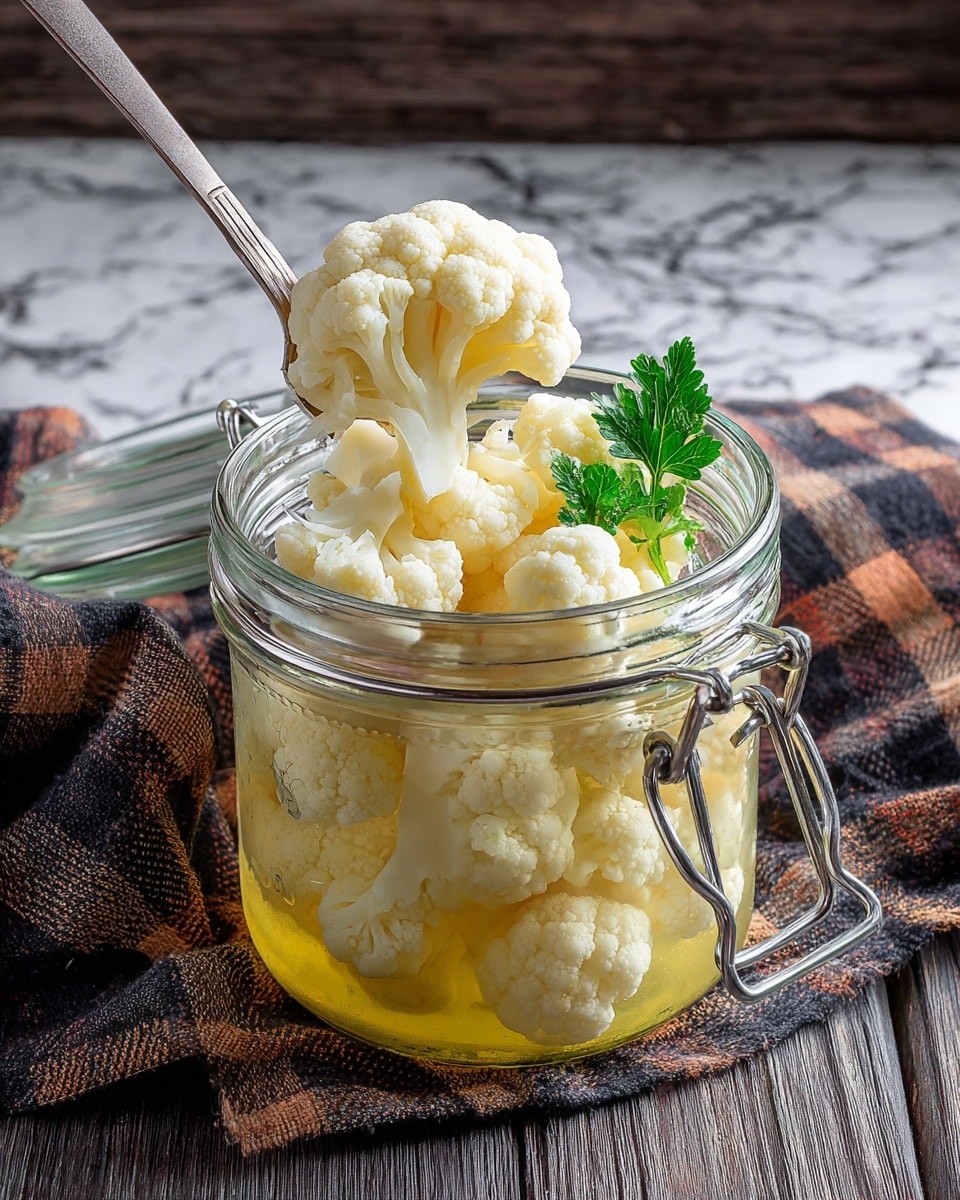
Serve this delicious recipe with your favorite sides.
FAQs
Can I use a different type of vinegar for this recipe?
Yes, you can substitute white vinegar with apple cider vinegar or rice vinegar, but it will slightly alter the flavor. Stick to vinegar with at least 5% acidity for safe pickling.
How long do I need to wait before eating the pickled cauliflower?
It’s best to wait at least one week after pickling to allow the flavors to develop fully. The cauliflower will continue to improve in taste the longer it sits, up to a few months.
PrintItalian-Style Pickled Cauliflower Recipe
This Pickled Cauliflower, Italian Style recipe offers a vibrant and tangy way to preserve cauliflower with aromatic spices and herbs. Perfect as a crunchy snack or a flavorful addition to antipasto platters, these pickles combine the warmth of coriander, fennel, and mustard seeds with the heat of dried chiles and the earthiness of thyme, all preserved in a vinegar brine. The pickling process involves boiling and canning for long shelf life, making this a classic kitchen staple.
- Prep Time: 20 minutes
- Cook Time: 15 minutes
- Total Time: 1 week and 35 minutes (including waiting time for pickling)
- Yield: 4 pints 1x
- Category: Preserving
- Method: Baking
- Cuisine: Italian
- Diet: Gluten Free
Ingredients
Vegetables
- 1 large head of cauliflower
Spices
- 4 teaspoons coriander seeds
- 4 teaspoons fennel seeds
- 4 teaspoons mustard seeds (optional)
- 4 dried hot chiles
- 2 teaspoons dried thyme
Brine
- 7 cups white vinegar
- 7 cups water
- 5 tablespoons pickling or kosher salt
Instructions
- Prepare Canning Pot and Jars: Fill a large canning pot with water and bring it to a hot simmer. Ensure it has a rack or metal steaming insert at the bottom to prevent jars from touching the pot surface. Get 4 clean pint jars ready with new lids.
- Toast the Spices: In a dry pan, toast coriander seeds, fennel seeds, and mustard seeds until fragrant. Keep stirring or tossing occasionally. Once the first seed pops, immediately turn off the heat to avoid burning.
- Prepare Cauliflower: Break the cauliflower into bite-sized pieces suitable for pickling by cutting around the stem and breaking down florets into smaller clusters. Trim any large stem pieces as needed.
- Fill Jars: Evenly divide the toasted spices, thyme, and dried chiles among the jars. Pack the cauliflower pieces into the jars, leaving about 1/2 inch of headspace at the top for proper sealing.
- Make and Add Brine: Bring the white vinegar, water, and pickling salt to a boil. Carefully ladle the hot brine into the jars over the cauliflower, ensuring the florets are submerged. You may have some excess brine depending on how tightly packed the cauliflower is.
- Seal and Process Jars: Wipe the rim of each jar clean before placing new lids on top (new lids are necessary for a proper seal while you can reuse metal rims). Place the jars in the simmering water of the canning pot for 15 minutes to process and seal.
- Cool and Store: Remove the jars and place them on a cutting board or rack to cool. Let the pickles sit sealed for at least one week before enjoying to allow flavors to develop. These pickles can keep in the pantry for up to one year. Refrigerate after opening.
Notes
- Serve these pickled cauliflower florets alongside brine-pickled carrots and pickled artichoke hearts for a delicious antipasto spread.
- A plate of salami, quality cheese, fresh bread, and a good bottle of wine complete a perfect appetizer experience with these pickles.
Keywords: pickled cauliflower, Italian pickles, preserved vegetables, homemade pickles, vinegar pickling, antipasto, fermented vegetables